How to Save Any Instagram Video or Photo With the Best Downloader
Most people don’t realize that an Instagram downloader can save any public post in under five seconds. It works simply by pasting the post’s link into the tool, then hitting download to grab the video or photo directly to your device. That means you can keep memes, tutorials, or recipes offline forever, even when the original post gets deleted. Just copy the URL from the app, paste it, and tap — no login or extra software required.
What Exactly Is a Media Saver for Instagram and How Does It Work?
A media saver for Instagram is a tool—often a website, browser extension, or app—that extracts direct file URLs from Instagram’s backend so you can save photos, videos, reels, and stories to your device. Unlike the native app, which blocks right-clicking or long-press saving on most content, an Instagram downloader bypasses this by copying the post’s embed code or intercepting the video stream from Instagram’s CDN. You paste the post link into the saver; it parses the page’s JSON metadata to locate the highest-quality media, then generates a direct download link. For private accounts, you must be logged in and the tool uses your session token to access the content legally for personal backup. No account is needed for public posts—just paste, fetch, and save.
The core trick is that every Instagram post is just a public URL with hidden media assets, and the saver simply reveals them.
This works on mobile and desktop, though browser extensions automate the process by adding a download button directly under each post.
The Core Mechanism Behind Fetching Public Content
When you target public content, an Instagram downloader sends a direct request to Instagram’s CDN using the post’s unique shortcode. This shortcode, embedded in the URL, acts as the lookup key. The tool then parses the returned page metadata, isolating the `og:video` or `og:image` tag. By staking a claim on that specific meta field, it extracts the direct media file endpoint. This bypasses the visual interface entirely, grabbing the source URL that the app itself would load. Crucially, this mechanism works because public profiles expose this metadata without authentication, meaning the downloader simply mirrors a publicly visible network request. The entire operation completes in under two seconds, relying on Instagram’s own exposed structure rather than hidden APIs.
At its core, the mechanism resolves the post’s shortcode to a direct CDN asset URL via public metadata tags, enabling instant retrieval without login.
Differences Between Online Web Tools, Browser Extensions, and Mobile Apps

Online web tools for Instagram downloading require copying a link and pasting it into a browser tab, offering cross-device access without installation but often subject to interface changes. Browser extensions integrate directly into the Instagram page, adding a download button beside posts, which streamlines workflow but may break after platform updates and pose higher security risks due to granted permissions. Mobile apps, installed natively, provide the most stable performance for saving Reels and Stories, yet demand storage space and are frequently removed from official stores for policy violations. Unlike extensions, web tools work on locked-down devices, whereas apps excel at batch processing. Choose based on convenience versus reliability, as each presents a distinct trade-off in functionality and safety. Browser extensions offer the fastest inline saving experience but carry the highest maintenance burden.
Step-by-Step Guide: Saving Your First Post, Reel, or Photo in Under a Minute
To save your first post, reel, or photo in under a minute, start by copying the Instagram link from the three-dot menu. Next, open an instagram downloader website that requires zero app installs. Paste the URL into the input field and hit the download button; most tools auto-detect the media type, whether it’s a carousel, short video, or still image. For reels, always choose the highest video quality option (e.g., 1080p) to avoid compression, then tap the save icon. The trick is selecting a professional downloader that doesn’t demand login or watermark removal—this keeps the process under 60 seconds. Always long-press a photo on mobile to trigger a direct quick-save if the tool offers a mobile shortcut. Verify the file in your gallery immediately.
Copying the Link Correctly from the Instagram App
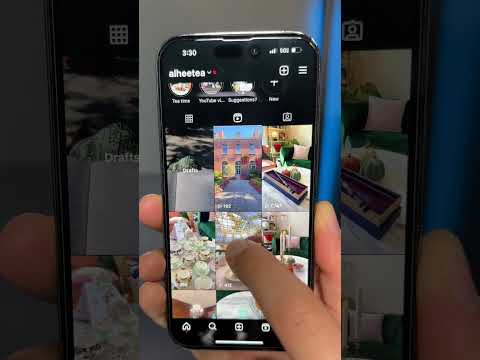
To copy the link correctly from the Instagram app, first tap the paper-plane icon below any post or reel, then select “Copy Link”—avoid using the share-to-Story option, which strips the direct URL. For Reels, open the clip, tap the three dots (⋯) at the bottom right, and choose “Copy Link” from the menu. Photos require tapping the same ⋯ icon above the image, then selecting “Copy Link” from the dropdown. Finally, paste the link into your downloader, ensuring it starts with `https://www.instagram.com/`—if it shows `instagram://` instead, the copy failed. Follow this sequence:
- Tap the share icon (paper plane) or ⋯ menu.
- Select “Copy Link” explicitly.
- Paste into your downloader and verify the URL begins with `https://`.
Pasting the URL and Choosing the Right Output Format
After copying the link, paste it directly into the downloader’s input field, ensuring no extra text or line breaks accompany it, as stray characters will trigger a fetch error. The tool then reads the URL’s metadata to identify whether it points to a reel, photo, or standard post. Immediately after, select the correct output format for your Instagram downloader—choose MP4 for video reels to preserve motion, or JPG for still images to maintain sharpness. For carousels, pick “All Items” to grab every slide in its native resolution, avoiding a single cropped file. Confirm the format dropdown matches the media type before hitting download.
Why Would You Need a Local Backup Tool for Your Favorite Content?
You open Instagram to revisit a creator’s recipe or a friend’s travel reel, only to find the post is gone—deleted, archived, or their account vanished. A local backup tool, acting as an instagram downloader, gives you permanent ownership of that content by saving the original file directly to your device. Without it, every like, comment, and saved collection is just a lease on someone else’s server, vulnerable to removal without notice. When you download a video or carousel locally, you can watch it offline on a commute, edit it into a personal montage, or simply preserve a memory that matters—independent of Wi-Fi, app updates, or account bans. Your favorite content shouldn’t evaporate because a post trends and then vanishes; a local copy makes it yours forever.
Offline Viewing for Commutes and Areas with Poor Connectivity
When your train dives underground or you hit a dead zone on a rural highway, streaming Instagram Reels becomes a buffering nightmare. A local backup tool solves this by letting you save videos and Stories directly to your device, giving you uninterrupted offline viewing for commutes without relying on flaky mobile data. Instead of staring at a spinner, you replay saved content instantly, even in tunnels, basements, or remote campsites where connectivity drops to zero. This turns a frustrating dead spot into a personal entertainment library you control. Pre-saving a weekend’s worth of content while on Wi-Fi costs you nothing and eliminates the anxiety of a stalled download mid-journey. For daily train riders or off-grid travelers, this practical habit beats any cloud-dependent streaming plan.

Archiving Inspirational Reels, Tutorials, and Memorable Moments
Instagram’s ephemeral nature means that a creator might delete a reel, a tutorial could vanish, or a live moment might disappear before you can rewatch it. Archiving Inspirational Reels, Tutorials, and Memorable Moments with an Instagram downloader turns your device into a personal library—you can revisit a chef’s plating technique, a coder’s step-by-step fix, or a friend’s birthday story without hunting through a feed. Instead of relying on shaky screen recordings, you save the original quality, preserving text overlays and audio cues intact. This is practical for offline study on commutes or for building a moodboard of ideas. When you later need that specific editing trick or a nostalgic clip, it’s instantly accessible—no buffering, no link rot.
| Content Type | Storage Value |
|---|---|
| Tutorials | Reproduce steps exactly, even offline |
| Inspirational Reels | Re-watch for creative prompts anytime |
| Memorable Moments | Keep personal or cultural highlights safe |
Preserving High-Quality Originals Without Compression Artifacts
Instagram’s servers re-encode every upload, stripping metadata and introducing visible macroblocking on gradients and fine textures. A local backup tool captures the original file before any second-generation recompression, preserving the exact bitrate and color data the uploader intended. This matters for archival purposes, where lossless fidelity of source media prevents progressive quality loss across repeated re-saves. By storing the pristine .jpg or .mp4 directly, you avoid the soft edges and banding that plague screen-recorded or re-downloaded versions. The tool must bypass Instagram’s CDN transcode stream, pulling the source container and its original quantization tables instead. This ensures your offline copy matches the creator’s master file, not a platform-modified derivative.
Preserving high-quality originals means capturing pre-compression files, locking in untouched bitrate, metadata, and color depth for permanent archival accuracy.
Selecting the Right Tool: Key Features to Look for in a Reliable Downloader
When you’re hunting for an Instagram downloader, the first thing I check is whether it handles both Reels and carousel posts cleanly—because nothing kills a workflow like grabbing only the first slide. I also look for a tool that preserves original quality, not a compressed mess, and that offers a paste-link interface instead of forcing me to log in. The quiet differentiator is batch capability; saving a creator’s entire highlight reel one by one is soul-crushing.
A reliable downloader should also show a live preview before saving, so I can verify the file type and resolution without wasting data.
Finally, I test how it handles private-profile errors—it should tell me politely that it can’t fetch, not hang indefinitely. That’s the difference between a tool I trust for a year and one I delete after one afternoon.
Support for Multiple Formats: MP4, MP3, and Full-HD vs. 4K Options
A reliable Instagram downloader must offer flexible output choices. For video content, prioritize support for both MP4 and MP3 formats, allowing you to save clips or extract audio from Reels and IGTV. Resolution options are equally critical: Full-HD vs. 4K selection ensures you match the original upload quality, which is especially important for high-detail carousel posts or longer videos. Check that the tool detects the source’s maximum resolution automatically, then lets you downgrade to 1080p to save storage space. A clear sequence exists: first, paste the link and let the tool scan available qualities; second, choose MP4 or MP3; third, select Full-HD or 4K before downloading. Avoid tools that force a single preset, as they may degrade visual fidelity or bloat your device.

Batch Downloading and Story/Highlight Extraction Capabilities
For any serious Instagram downloader, batch downloading and story/highlight extraction capabilities separate a convenience tool from a time sink. Batch functionality lets you grab entire profiles, curated collections, or dozens of reels in one action, rather than clicking through each post individually. Meanwhile, story and highlight extraction requires handling ephemeral content—stories vanish after 24 hours, so a reliable tool must detect and save them instantly, often with an automatic refresh. Highlights, being permanent, demand a dedicated parser that separates each highlight’s clips into organized folders. Look for tools that let you select specific story dates or highlight titles, not just dump everything. A clear sequence to instagram video downloader test:
- Paste a profile link and see if a “select all” option appears.
- Toggle story capture and confirm it tracks live updates.
- Export highlights with original timestamps intact.
Without these bulk-capture mechanics, you’ll waste hours manually saving what should take seconds.
Privacy Considerations: Which Tools Avoid Storing Your Data or IP Address
When evaluating an Instagram downloader, privacy hinges on whether the service processes media server-side or directly in your browser. Tools that rely on client-side processing never transmit your IP address or the requested file to a third-party server, eliminating logs of your activity. Look for explicitly stated no-log policies, but verify them by checking if the tool functions without requiring an account or captcha, as these often create identifiable metadata. Crucially, avoid downloaders that bundle tracking pixels or analytics scripts, as these silently capture your IP even if the tool claims otherwise. A truly privacy-respecting option will let you paste a link and immediately download, with no intermediary receiving your request. Client-side processing tools are the only verifiable way to prevent IP exposure.
Choose only client-side downloaders with explicit no-log policies and no embedded analytics; these prevent your IP address from ever reaching a server.

Frequently Asked Questions: Troubleshooting Common Glitches and Limitations
When your Instagram downloader suddenly fails, the first question is often why the “Download” button vanished from a profile—this usually means the account is private, and no tool can bypass that wall. Copying a link from the mobile app and pasting it into the web version of the downloader frequently causes “video not found” errors because the app appends tracking parameters; trimming everything after the question mark in the URL fixes that. Another common glitch appears with Reels that play fine on screen but produce only a black file—this happens when the clip uses licensed audio, and the downloader’s server-side renderer times out; trying the same link after 10 minutes often yields a silent but playable MP4. Story downloads expire after 24 hours, so a “link expired” message isn’t a bug, just a limitation of the source.
If a downloader returns an empty file for a carousel post, it’s because the tool only grabs the first image unless you explicitly select “all media” in the options menu.
Always re-copy the link directly from the “share” arrow, not from the browser’s address bar, to avoid truncated URLs that cause “invalid media” errors.
What to Do When the Download Fails or Produces a Blurry File
When a download fails, first verify your internet connection and confirm the Instagram video is still publicly available; a deleted or private post triggers an error. For a saved file, server-side compression or copying the link mid-buffering often causes low resolution. Clear your browser cache and retry using the latest direct video URL from the page source, not the share link. If the result remains blurry, select a higher-quality output option in the tool’s settings, or switch to a dedicated desktop downloader that extracts the original MP4 stream. Re-attempt the download during off-peak hours to avoid Instagram’s rate limiting, which can truncate data and degrade sharpness permanently.
Verify the link, clear cache, choose the highest quality setting, and retry with the direct URL to fix failures and blurry files.
Why Some Profiles or Posts Cannot Be Saved and How to Work Around It
Some profiles or posts cannot be saved because the account is private, temporarily suspended, or geo-restricted, which blocks the downloader from fetching media. Additionally, posts that are reels with licensed audio, live streams, or story highlights older than 24 hours may return a “content unavailable” error due to server-side limits. To work around this, first verify your internet connection and update the downloader, then try copying the post link directly from the app’s share menu instead of a browser. For private profiles, request follow access; for restricted posts, use a web-based downloader that mimics mobile user agents. If the media still fails, wait 15 minutes, clear the cache, or use a different format (e.g., MP4 instead of images).
Personal privacy settings and temporary content restrictions prevent saving; work around by checking links, adjusting user agents, or waiting before retrying.
Is It Safe to Use These Tools, and How to Spot Malicious Clones
Using Instagram downloader tools is generally safe only if you choose reputable, well-reviewed services. However, malicious clones are rampant, disguised as legitimate apps but packed with adware or credential-stealing code. To spot a fake, check for excessive permissions—a downloader should never request access to your contacts or SMS. Scrutinize the URL for subtle misspellings or odd domain extensions. Also, avoid tools that require your Instagram password; secure downloaders only need a public link. If the site is flooded with intrusive pop-ups or forces a desktop app install, abandon it immediately. Red flags include missing privacy policies and unverified developer names.
Q: How can I verify a downloader isn’t a malicious clone?
A: Paste a test link, then watch for redirects to unrelated pages. Genuine tools extract the video instantly without prompting you to install browser extensions. Finally, search the tool’s name plus “scam” or “virus” to see user reports.